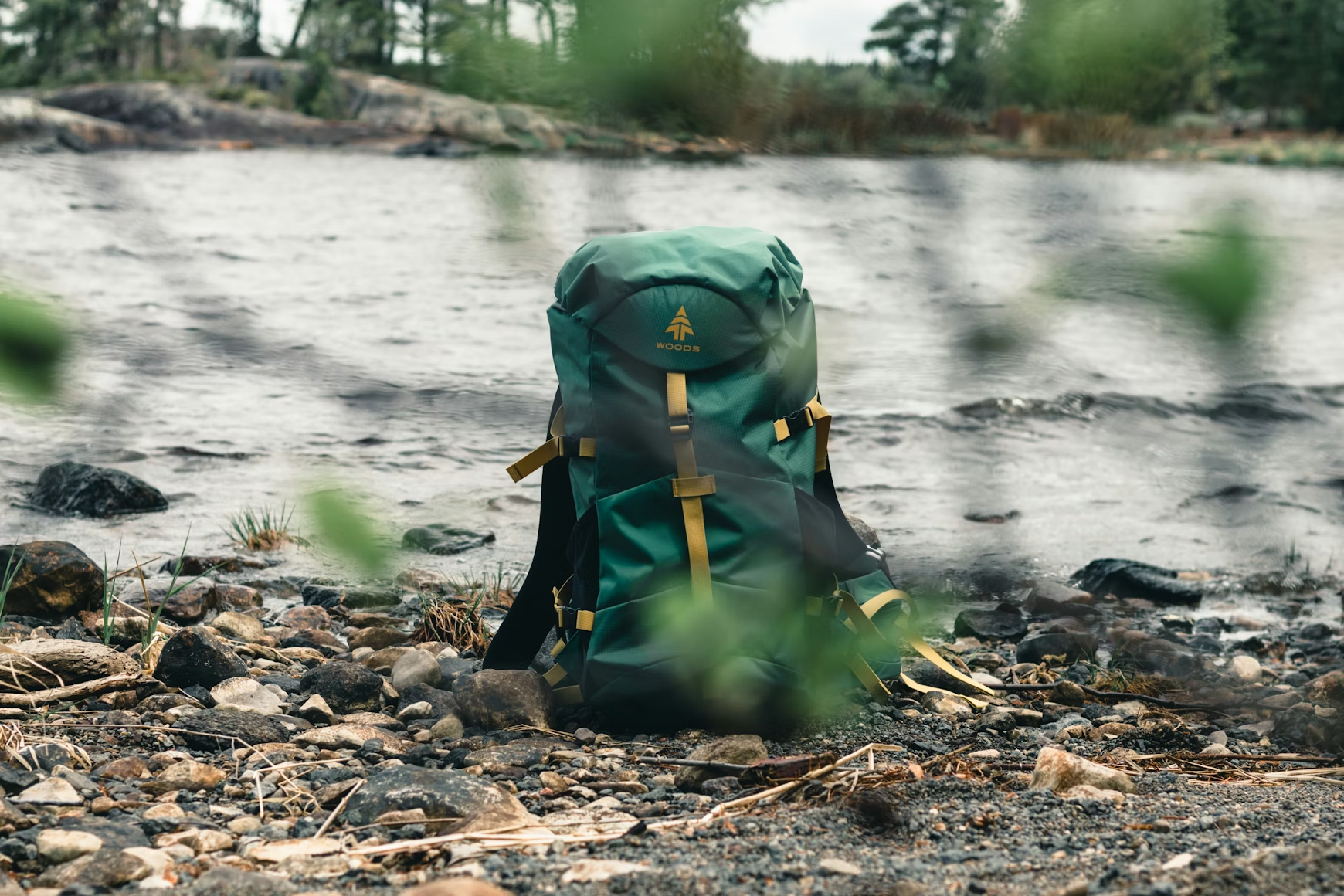
You spent $5,000 on that mountain sunrise shoot. The photos are stunning. Your backpack looks heroic against the alpine glow.
But your conversion rate is still stuck at 1.2%.
Here’s the problem: beautiful lifestyle photos often fail where ugly product shots succeed. Your customers need to see your gear work, not just look good.
The Aspiration Trap
Outdoor brands love lifestyle photography. And for good reason—it sells a dream. That dream gets people to your website and builds brand desire.
But aspiration alone doesn’t close sales. Once someone decides they want a hiking backpack, they need practical information. How many pockets does it have? Where do the straps adjust? What does the back panel look like?
Most outdoor brands show 80% lifestyle shots and 20% product details. The conversion data suggests this ratio should be flipped.
What Actually Drives Purchase Decisions
When REI analyzed their product page performance, they found something surprising. Pages with more technical product shots converted 40% better than those heavy on lifestyle imagery.
Why? Because outdoor customers are gear nerds. They want to understand exactly what they’re buying.
Think about your own purchasing behavior. When you’re researching a new tent, do you care more about the sunset silhouette shot or the clear view of the vestibule space?
Your customers think the same way.
The Information Gap
Your beautiful lifestyle photos create an information gap. Customers see inspiration but can’t find specifications. They bounce to competitors who show the details.
Take backpack photography as an example. Most brands show lifestyle shots of hikers on trails. These photos look great but answer zero practical questions:
- How does the hip belt adjust?- Where do you attach trekking poles?- Is there internal organization?- How does the top lid work? A single well-lit product shot can answer all these questions. But most brands bury these shots at the bottom of their galleries.
The Conversion Formula That Works
High-converting outdoor product pages follow a specific photo sequence:
Photo 1: Clean product shot on white backgroundPhoto 2: Key feature highlight (main selling point)Photo 3: Lifestyle context (aspiration)Photo 4: Technical details (zippers, pockets, adjustments)Photo 5: Scale reference (person wearing/using it)
This sequence hooks visitors with aspirational content, then feeds them the technical details they need to purchase.
Notice how the lifestyle shot comes third, not first. You’re earning the right to show aspiration by first proving the product’s worth.
Feature Photography That Sells
Your product has features that solve problems. Show them solving those problems.
Instead of generic “person hiking with backpack,” show:
- Hands accessing the bottom zipper compartment- The hip belt adjustment in action
- Side pocket holding a water bottle- Top lid organization system with gear inside These shots feel less “marketing-y” but drive more sales. They answer the specific questions your customers have.
The White Background Advantage
Clean product photography on white backgrounds consistently outperforms lifestyle shots for conversion. Here’s why:
White backgrounds eliminate distractions. Customers focus on the product, not the scenery. They can see colors accurately and examine construction details.
Amazon figured this out years ago. Their main product images are almost always on white backgrounds. This isn’t because Amazon lacks creativity—it’s because white backgrounds convert better.
Your hero image should be a clean product shot. Save the mountain sunrise for image two or three.
Technical Shots Your Customers Actually Want
Based on customer service inquiries and return reasons, here are the detail shots that matter most:
For Backpacks:
- Interior organization layout- Hip belt and shoulder strap adjustments- Access points (top, bottom, side zippers)- Attachment points for gear For Jackets:
- Pocket locations and sizes- Hood adjustment system- Fit on actual person (not mannequin)- Layering compatibility For Footwear:
- Sole tread pattern and depth- Ankle support structure- Interior cushioning/support- Sizing on real feet These aren’t glamorous shots. But they prevent returns and increase confidence to purchase.
Balancing Aspiration and Information
You still need lifestyle photography. Aspiration drives brand desire and justifies premium pricing. The key is using it strategically.
Lead with information, support with aspiration. Show the product working, then show the lifestyle it enables.
When you do shoot lifestyle content, make it informative. Show your tent in actual weather conditions, not just golden hour calm. Display your jacket on a real hike, not a model posing by a fake campfire.
Mobile-First Product Photography
Over 70% of outdoor gear purchases start on mobile devices. Your product photography must work on small screens.
This means:
- High contrast details that show up on phone screens- Larger text overlays for feature callouts- Simpler compositions that don’t get cluttered when scaled down- Vertical orientations that fill mobile screens That beautiful wide landscape shot with tiny gear might look amazing on desktop. On mobile, your product disappears.
Testing Your Photo Performance
Most outdoor brands never test their product photography. They choose images based on what looks good, not what converts.
Start tracking these metrics:
- Time spent on product pages- Scroll depth on mobile- Cart abandonment at product level- Customer service questions about features If people aren’t scrolling through your gallery or are asking questions answered by your photos, your images aren’t working.
The Action Plan
Here’s how to audit and improve your product photography:
- Review your current photo order - Is your hero image aspirational or informational?- List your top 5 customer questions - Do your photos answer them?- Check mobile performance - Do your key details show up on phone screens?- Test different hero images - Try leading with product shots vs lifestyle- Add missing technical shots - Focus on features that drive purchase decisions Your gear is probably great. Make sure your photography shows why.
Remember: pretty pictures build brands, but clear pictures drive sales. The best outdoor brands do both, in the right order.